
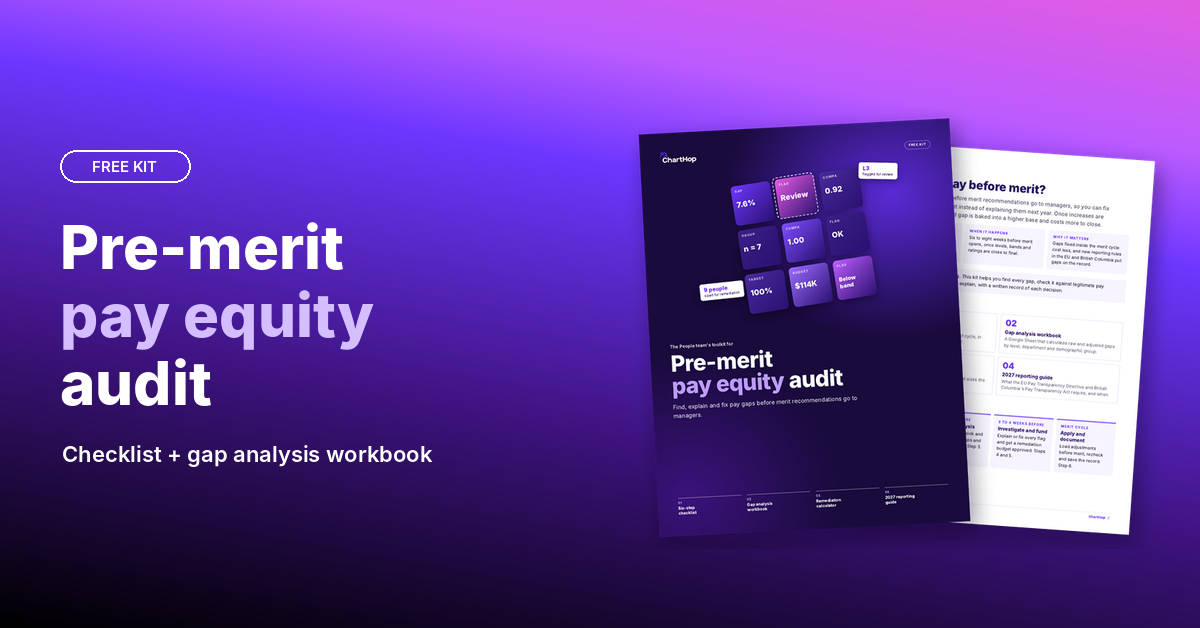
What you'll learn: Why to audit pay before merit, how to prepare your data, how to read raw and adjusted pay gaps, what to do with every flag and how to build fixes into your comp cycle. Free checklist and Google Sheets workbook at the end.
A pay equity audit compares pay for people doing work of equal value and checks whether any group is paid less without a legitimate, job-related reason. Most teams compare by level first, then by department, job family or location, across gender and race/ethnicity.
The audit has two outputs: a list of group-level gaps and a list of individuals paid below their peers. Each one is either explained by a documented factor or fixed.
Timing decides what an audit costs. Run it before merit recommendations go to managers and you can fix gaps with this cycle's budget. Run it after, and every unexplained gap is already built into a higher base salary that's more expensive to close next year.
Reporting rules are also raising the stakes. Under the EU Pay Transparency Directive, employers with 250 or more workers file their first gender pay gap report by June 7, 2027, covering 2026, and an unexplained gap of 5% or more in a category of workers triggers a joint pay assessment. British Columbia's Pay Transparency Act requires employers with 50 or more employees in BC to post an annual pay transparency report by November 1. This is a summary, not legal advice; confirm what applies to you with counsel.
Start six to eight weeks before merit opens. Most audits stall on data cleanup, so give it the most time.
A pay gap only means something when you compare people doing work of equal value. Group by level first, layer in job family or department where pay markets differ and split by location if your bands are geo-adjusted. Set a minimum group size (5 is a common default) so one or two salaries don't drive the result, and write down which pay factors you consider legitimate before you look at the numbers.
The raw gap compares median base salary between groups. The adjusted gap compares median compa-ratio (salary divided by band midpoint), which controls for the fact that people sit in different bands.
Then review individuals: anyone below their band minimum or well below the median compa-ratio for their level.
A flag is a question to answer, not a finding. Check each one against the legitimate factors you listed in Step 2, such as documented performance, time in role, location or a recent promotion. Talk to the HRBP or manager when the data doesn't explain it, and record a short written reason for every decision. Treat any gap you can't explain with a documented, job-related reason as one to fix.
Ask Finance for a remediation budget that sits apart from the merit pool. If equity fixes come out of merit, managers end up taking increases from one person to fix another's pay. Cost out bringing every flagged employee to their band minimum or their level's median compa-ratio, check the total as a share of payroll and by department, and get sign-off before merit planning opens.
Apply equity adjustments before merit increases are calculated, so merit percentages apply to the corrected base. Load adjustments as a separate line item, brief managers on changes in their teams and rerun the audit on proposed post-merit salaries before approvals close. Merit increases can reopen a gap you just fixed.
The kit includes everything above in a ready-to-use, 9-page PDF with fillable checklists and a flag log, plus a Google Sheets workbook that calculates raw and adjusted gaps by level, department and demographic group, flags individuals paid below their peers and sizes your remediation budget by department. It also includes a 2027 reporting guide for the EU and British Columbia.
Download the free pay equity audit kit →
ChartHop Compensation keeps salary, bands, performance ratings and org data in one place, so you can spot and fix pay gaps inside your comp cycle without the export.

A practical guide to running a pay equity audit before merit recommendations go out: data prep, comparison groups, raw vs. adjusted gaps, investigating flags and funding fixes. Includes a free checklist and gap analysis workbook.
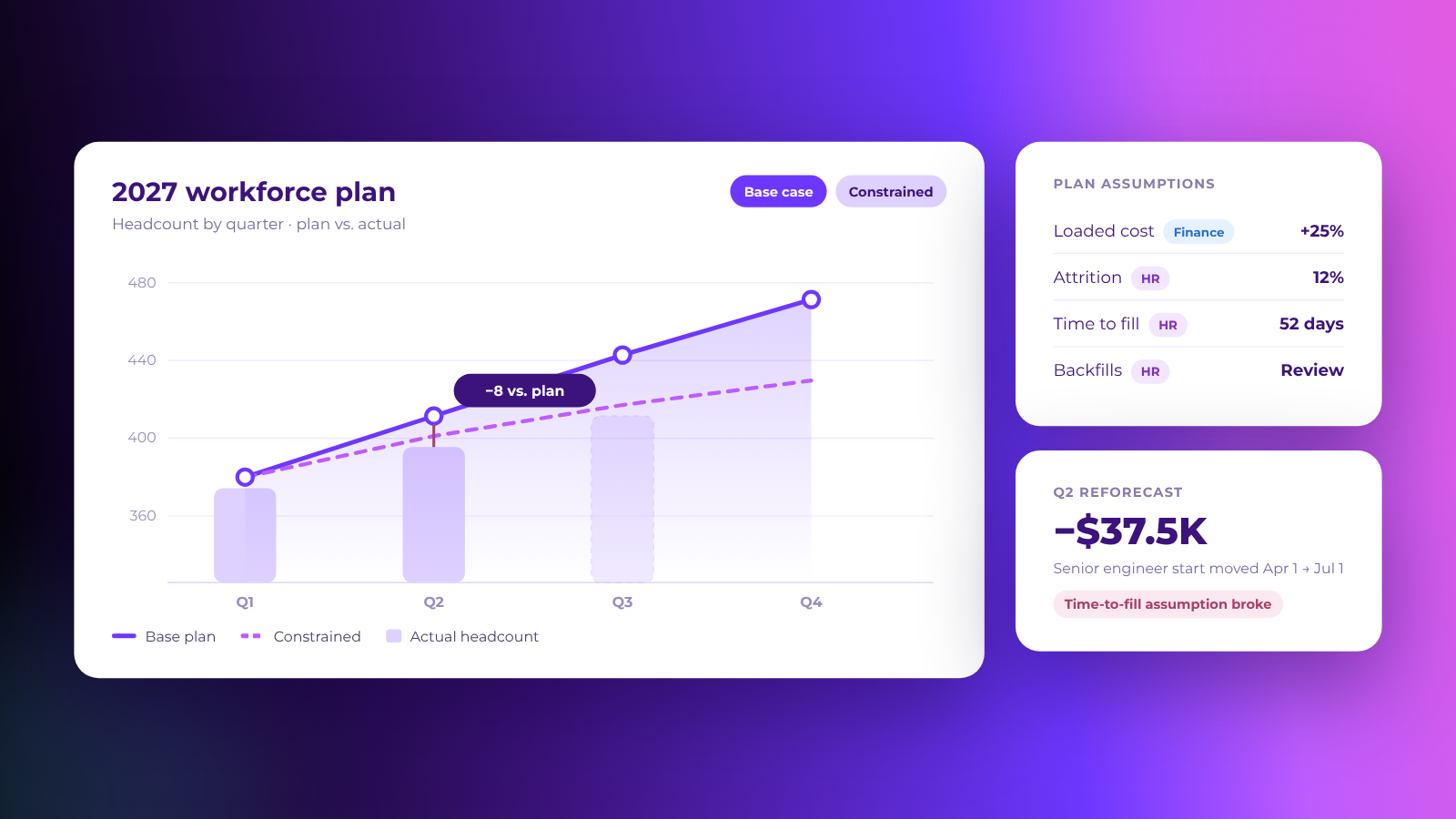
Most companies will approve a 2027 headcount budget. Far fewer will have a workforce plan. A practical guide to building one, from who owns which number to running the quarterly reforecast, so HR and Finance work from one plan instead of two.
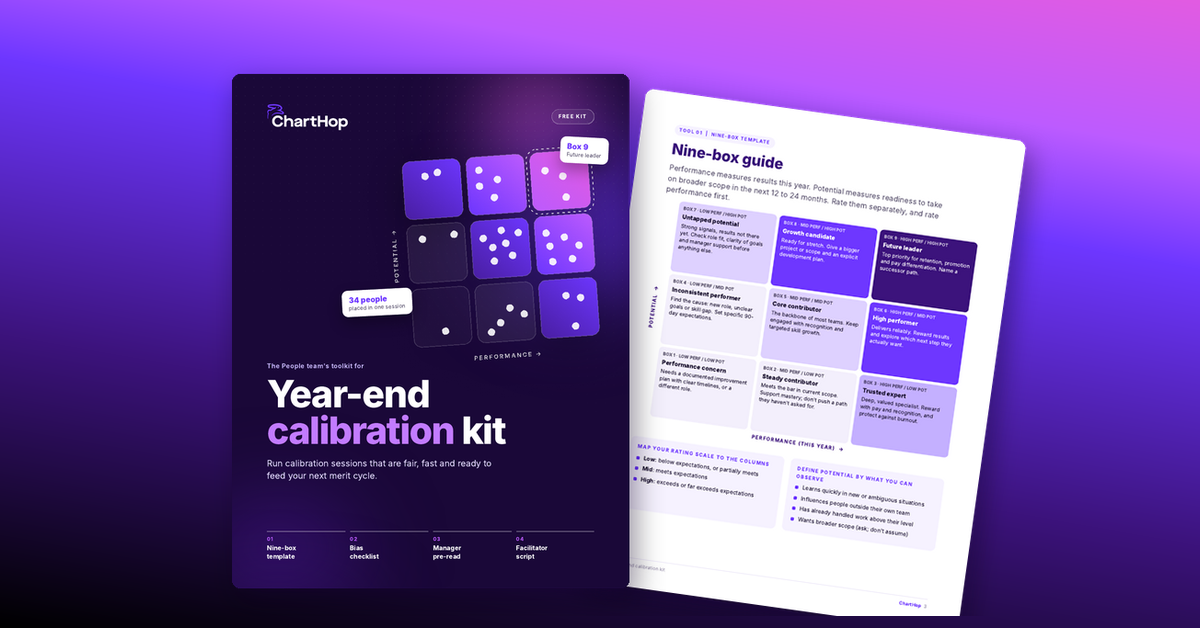
A practical guide to year-end calibration: what the meeting is for, how to prepare managers, a 90-minute agenda and the biases to watch for. Includes a free kit with a nine-box template, bias checklist, manager pre-read and facilitator script.


