An effective performance management strategy is one that’s continuous. These frequent evaluations at regular intervals provide necessary support to help your people achieve their goals and problem solve issues.
While this is important for all employees, constant check-ins are critical for new hires. In the first 90 days, employees are learning about your company, taking on new responsibilities, and discovering opportunities within their role. During this time, they may require a lot of hands-on engagement from their managers. With new AI-powered tools, HR teams can now analyze early-tenure feedback more effectively and give managers deeper insight into how new hires are adjusting.
It’s best practice for managers to have proactive check-ins with their new direct reports at the 30-day, 60-day, and 90-day marks.
These 30-60-90 check-in meetings should have clearly defined agendas that cover all areas of the new hire's work-life, reflection, feedback, and goal-setting. Every company has unique contexts to consider, but here's a list to get you started building out your questions to best support your people.
The 30-day review is beneficial for the new hire, manager, and company as a whole. It allows the employee to reflect on their first 30 days and ask any questions about the company or role. This check-in also gives managers the time to restate expectations and better understand the employees’ strengths and weaknesses so far. AI summaries can help HR spot early patterns in new-hire feedback—such as common onboarding gaps or recurring pain points.
Additionally, 30-day check-ins provide insights as to the effectiveness of your organization’s onboarding process. If employees are confused or overwhelmed, it may be time to reconfigure your onboarding strategy.
During the ownership phase, employees are better able to discuss their day-to-day tasks and relationships within the team. They’ll now have more experience to dive deeper into the following questions. At this stage, AI-generated insights can show whether new hires are ramping as expected or where additional support may be needed.
Now that your employee is three months in, you can work together to set long-term goals, identify professional development opportunities, and ramp up responsibilities. By this point, it’s also easier to recognize if this person is a strong fit for the position and company, or if they’re better suited elsewhere. Looking across many 90-day reviews, AI can identify what predicts long-term success and help you continuously refine your onboarding process.
While nothing replaces thoughtful conversations between managers and new hires, AI can make your 30-60-90 day process more efficient and insightful. With ChartHop’s AI capabilities built directly into your HRIS, managers and People teams can uncover patterns, prepare for check-ins faster, and support new employees with data-backed decisions.
If your check-ins include written feedback, ChartHop AI can analyze all responses across new hires and summarize what’s working and what needs attention.
It surfaces common themes, recurring challenges, onboarding gaps, and bright spots so you don’t miss critical insights hiding in individual responses.
ChartHop AI can also analyze quantitative data from your 30-60-90 check-ins, including:
It then provides concise summaries so managers can quickly understand how new hires are progressing and how onboarding is performing across the organization.
Managers can “Ask ChartHop” questions before check-ins, such as:
This gives managers the context they need to have more supportive, productive conversations.
No spreadsheets. No complicated reporting. With natural language filtering in ChartHop, you can ask:
AI instantly produces the answer, grounded in your real HRIS data and permissions.
Because ChartHop keeps historical data, AI can highlight:
This helps HR continuously refine the onboarding program—not just reactively.
Your people should feel supported no matter how many days, months, or years they’ve worked at your company. However, those first 90 days are crucial to employee success (and, in fact, retention), so it’s important to schedule check-ins to ensure they understand role expectations and are meeting their goals. With the support o AI tools, managers and HR teams can keep a better pulse on these early experiences through trend summaries and real-time insights based on your HRIS data.
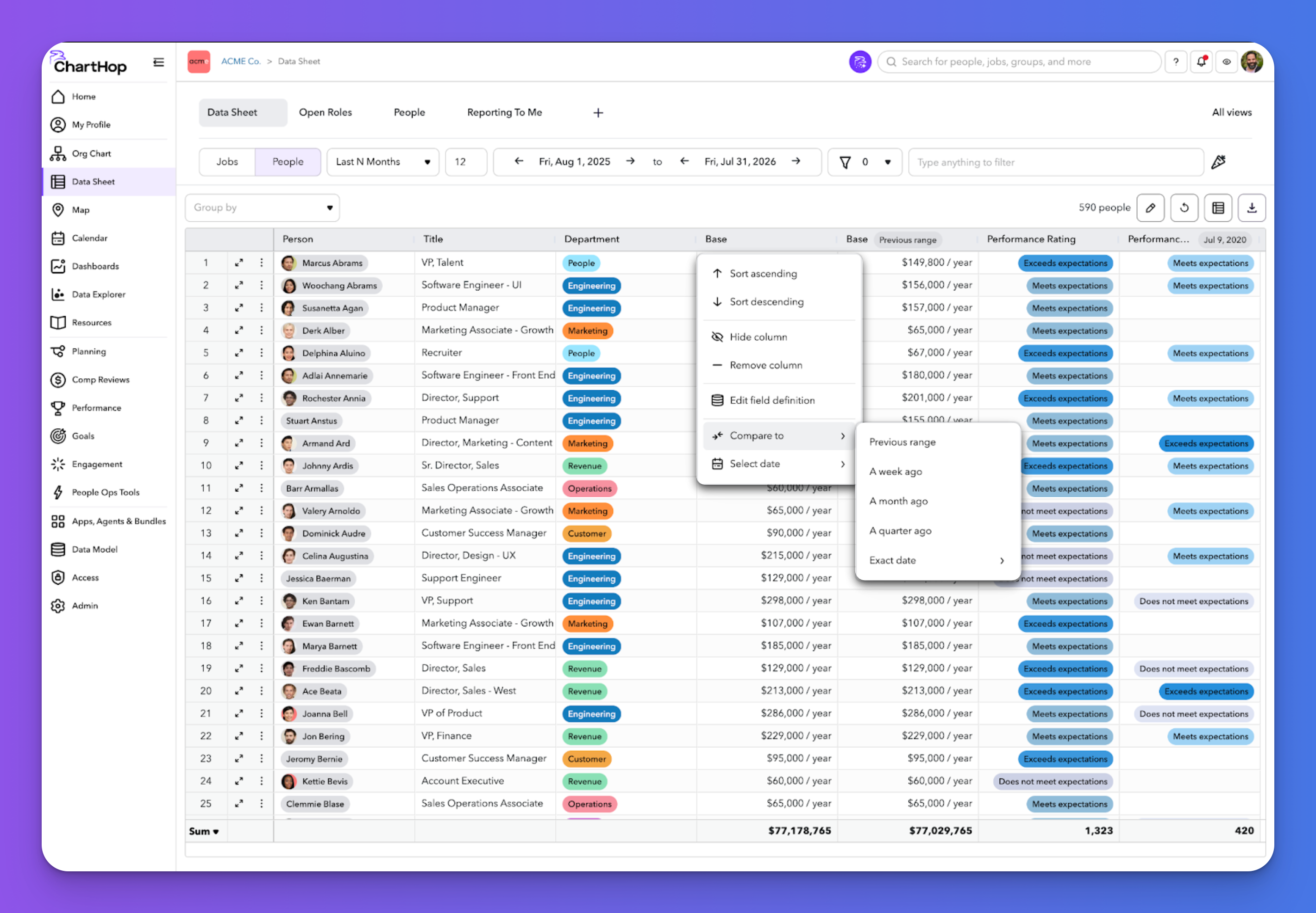

See the latest ChartHop updates for September 2026: time-based columns in the Data Sheet, automated time off milestone awards, fully translated goals, and a smarter scenario org chart.
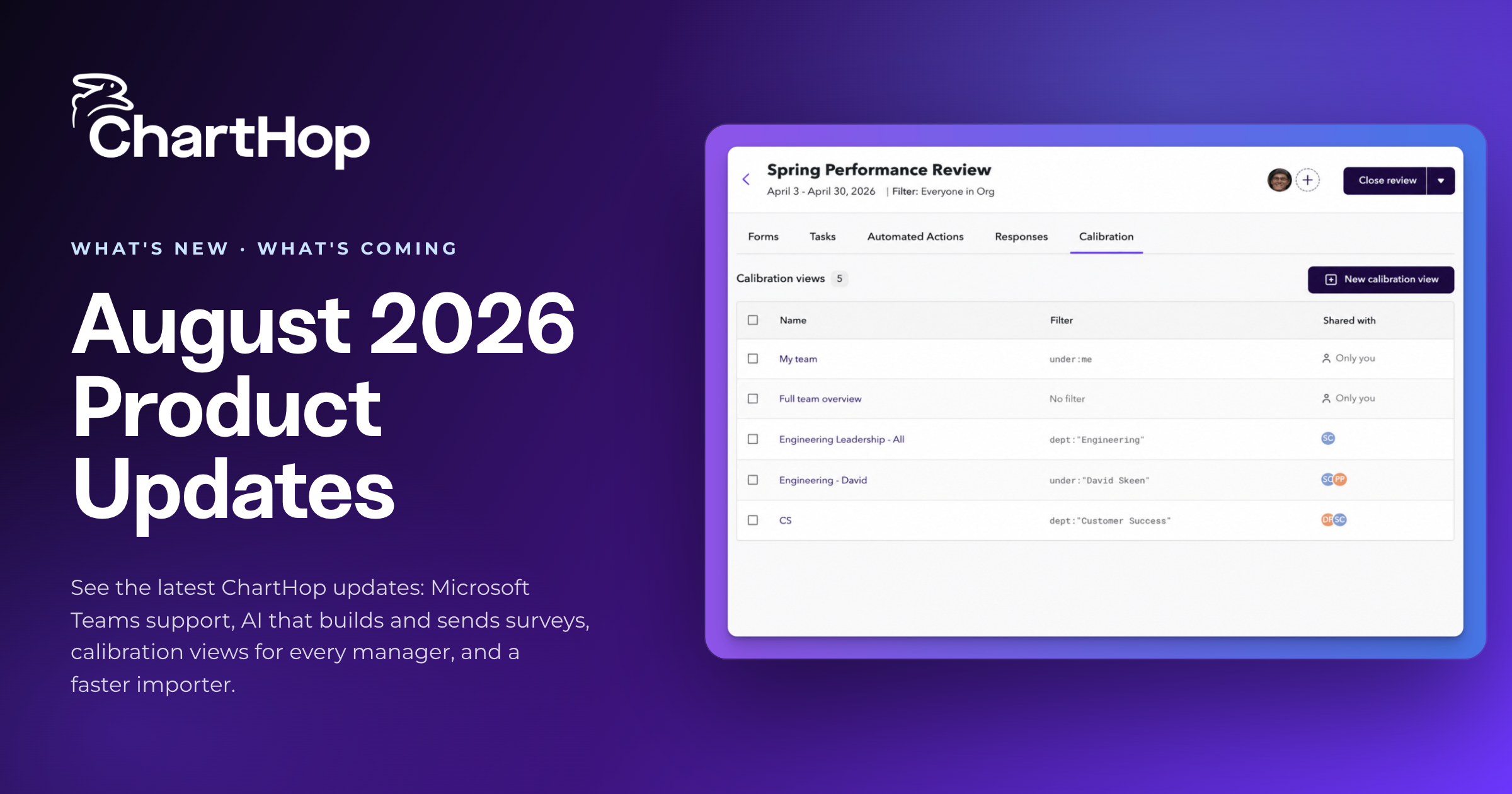
See the latest ChartHop updates for August 2026: Microsoft Teams support, AI that builds and sends surveys, calibration views for every manager, and a faster importer.

A practical playbook for putting AI agents to work in HR and people operations, from choosing the first workflow to setting guardrails and measuring results.