
.png)
Most companies don't offer Summer Fridays. In a LinkedIn community poll of 122 respondents, 49% said their company has no Summer Fridays program at all. But among those that do offer them, this flexible Fridays employee benefit consistently ranks as one of the highest-impact, lowest-cost perks a company can provide. The challenge is that it looks simpler than it is. If you're figuring out how to implement Summer Fridays, this post is built from conversations with People leaders who've actually done it, made mistakes, iterated, and figured out what works.
Before you pick a structure, get clear on what you're solving for. Is it burnout reduction? Retention? Employer brand differentiation? The answer shapes every design decision that follows.
Pilar Muner, VP of People and Talent, launched Summer Fridays specifically to reduce burnout. The result: no shift in productivity. Employees compressed their full week into four days, and burnout actually decreased. That's a clean win, but it only happened because the goal was defined upfront and the program was designed around it.
If you're always running at full speed, pick a season intentionally rather than waiting for a slow period that never comes. Companies that say "we'll try it when things calm down" never try it.
Most companies land on one of two structures:
The problem with half-days? Clients don't observe your schedule. An SVP of People we chatted to ran Summer Fridays at her organization and initially used a half-day model. It didn't hold. She switched to full Fridays off, and the results surprised her:
Brett Brawerman introduced half-day Fridays to combat burnout and a meeting-heavy culture. He framed it under a company value, which helped with adoption. But even he acknowledged one honest tradeoff: sales reps whose prospects wanted Friday afternoon meetings were stuck choosing between the benefit and their commission. "So that was the honest trade off," Brett noted. "You make commission, so it's up to you if you use the half day Friday benefit."
The most common window is Memorial Day through Labor Day. Some companies run fewer dates within that range. Some run this year round with alternating dates.
Raquel Krol, an HR and People leader with extensive experience across organizations ranging from Fortune 500 companies to early-stage startups, puts it bluntly: even two companies in the same building will have different needs. The same is true inside a single company. Payroll, finance, sales, and warehousing all require different approaches. A program that tries to be identical across every department will create resentment in the departments it doesn't work for.
Any Summer Fridays policy falls apart without clean operations. Here's how to keep it running smoothly.
Scheduling belongs with team managers, not HR. Kate McKinnon, an HR consultant and fractional CPO, is unequivocal on this:
HR sets the policy and the guardrails. Managers own the execution within their teams.
Use a dedicated, color-coded shared calendar visible to the whole team so coverage is clear at a glance. Kate used exactly this approach: a single calendar where everyone could see who was off and when, eliminating the "wait, who's covering Friday?" confusion.
The alternating model works well for customer-facing teams. Each person gets every other Friday off, and teammates can swap as long as they coordinate.
Set a clear policy on PTO stacking. Employees will combine Summer Fridays with planned vacation and end up with three consecutive Fridays off. Decide in advance whether that's allowed and communicate it before the program starts, not after someone books the time.
Commit to the structure for the full summer. Do a post-mortem after Labor Day and adjust for next year. Do not change the rules mid-summer. Nothing erodes trust faster than shifting the terms of a benefit people are already relying on.
Summer Fridays don't fix bad management. They reward good management with a tool that makes teams happier.
This is a risk that Summer Fridays HR teams and leadership rarely discuss upfront. Kate McKinnon has seen the dynamic play out:
Year one, employees treat Summer Fridays as an exceptional benefit. Year two, it's an expectation. Removing it hits engagement hard, especially after an acquisition or leadership change.
A Head of People we talked to at a Fintech company saw this firsthand. When their company's Summer Fridays program was eliminated after an acquisition, work-life balance engagement scores "skyrocketed then plummeted." Treat Summer Fridays as a commitment, not a trial. If you're not ready to sustain it, don't start it.
Summer is naturally slower in many industries. If a performance slide happens in July or August, Summer Fridays become an easy scapegoat.
Kate McKinnon experienced this directly: "There was a little bit of a slide in terms of performance, but I personally don't believe that it was related to the summer Fridays. I think it was seasonal, but it's a very easy thing to blame."
Going from a four-day week back to five days after Labor Day is a genuine morale dip.
Raquel Krol's team launched what they called "Fired Up Fridays": barbecues, Friday bingo, and team events specifically timed to the return to a full five-day schedule. The goal was to give people something to look forward to on Fridays again, rather than just mourning the loss of time off.
Other options practitioners have used:
One more note on feedback during the program itself. Raquel Krol's advice: skip formal surveys.
Use informal pulse checks instead. Conversations in 1:1s, a quick Slack check-in, a casual read on how people are feeling. Asking employees to fill out a survey right after you gave them a benefit adds burden and feels transactional. One company even had people post dedicated plans and pictures from their summer friday's to encourage engagement.
Kate McKinnon took a personal approach during year one: she didn't take Summer Fridays herself so her team could. She filled coverage gaps as needed. That's not a requirement, but it signals something about leadership commitment that no policy document can replicate.
Yes. If you're doing it, say so.
Summer Fridays show up in job descriptions, company career pages, and LinkedIn posts, and they genuinely move candidates. Brett Brawerman advertised Summer Fridays in job descriptions and found it excited candidates during recruiting. Brandi Emerson rolled out the benefit at a global SaaS org with US and Netherlands offices and called it "a major boost to morale with little to no negatives."
Summer Fridays work when they're designed intentionally, not announced impulsively. The companies that pull it off well treat it as a real operational program with structure, clear ownership, and a plan for what happens when summer ends. The ones that struggle treat it like a gift and figure out the details later. Know which one you're doing before you send the all-hands announcement.
The poll data and practitioner interviews in this post came from the People Ops Weekly Newsletter. Every week, we dig into one topic that People leaders are actually dealing with, and the responses shape what we publish. If you want to weigh in on the next one, subscribe here.

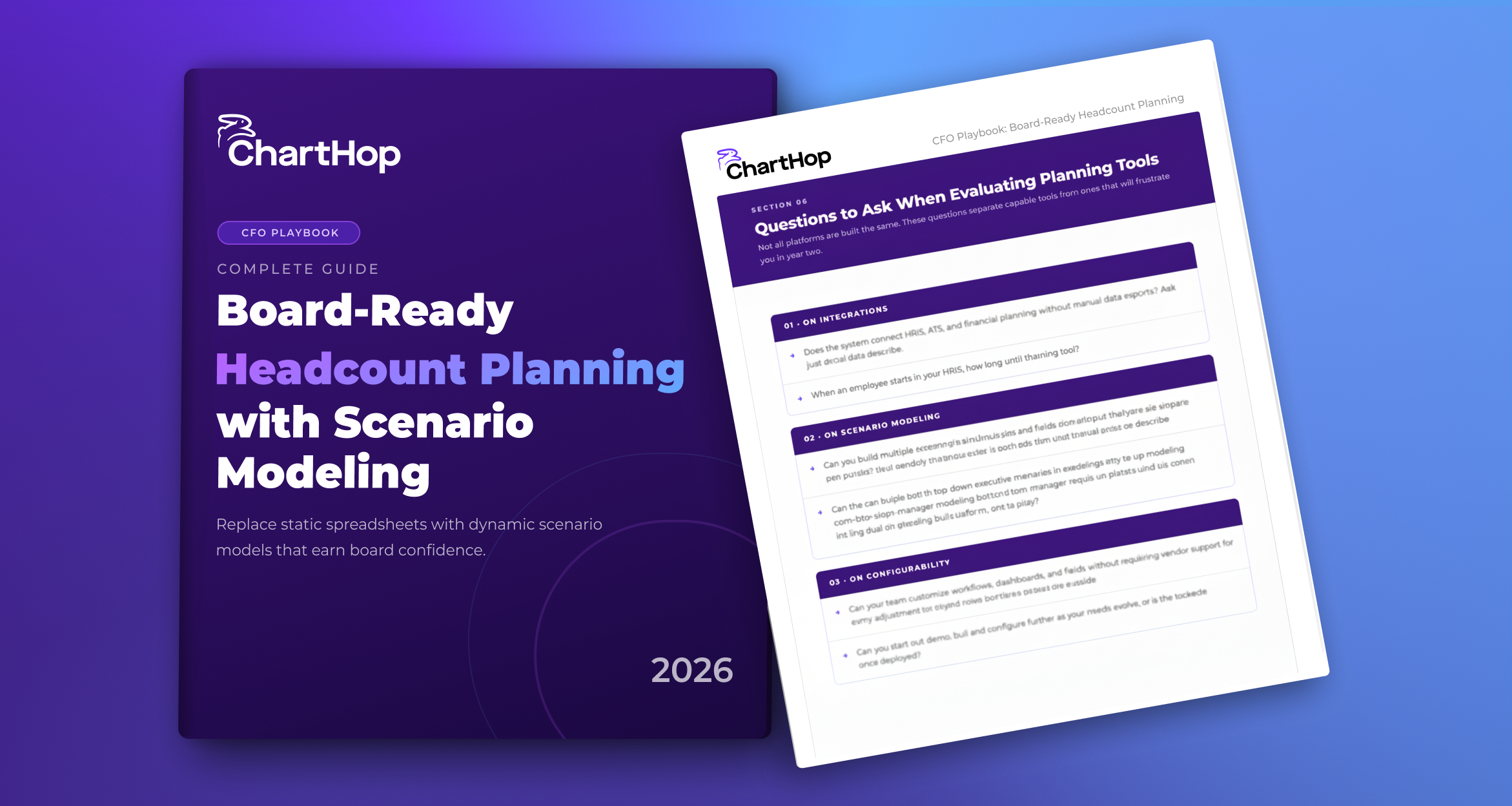

A CFO playbook for leaders who need to walk into board meetings with more than a single forecast — and leave with the board's confidence, not more questions.
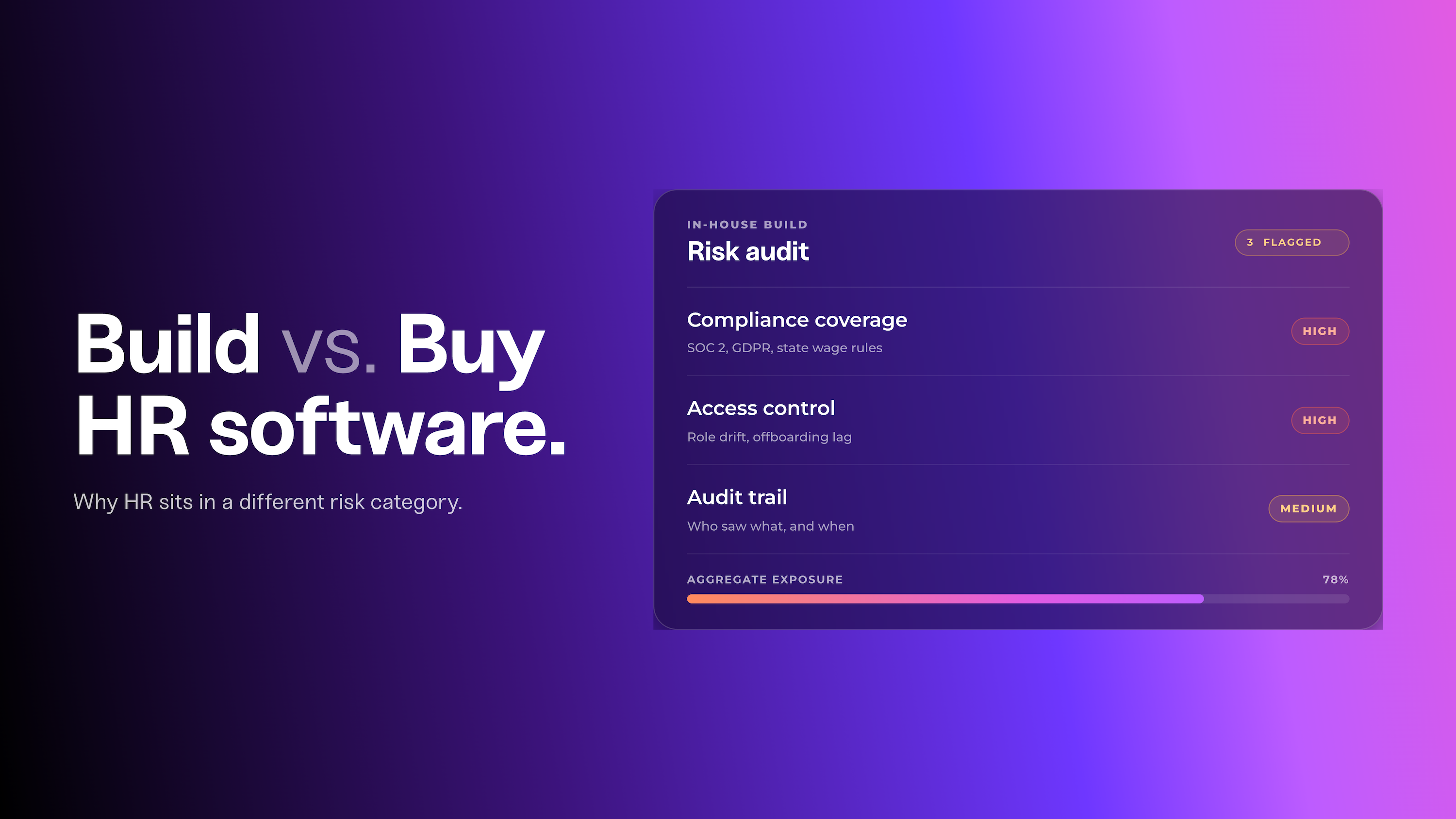
Building internal HR tools seems cost effective until you account for compliance risk, access control failures, and audit trail gaps. Here's a framework for making the right call.
Organizational intelligence is what a company knows about itself, connected in one place and current enough to decide on. Here is where the term came from, the five layers of data it spans, how it differs from workforce intelligence and people analytics, and the test a system should pass before it uses the name.
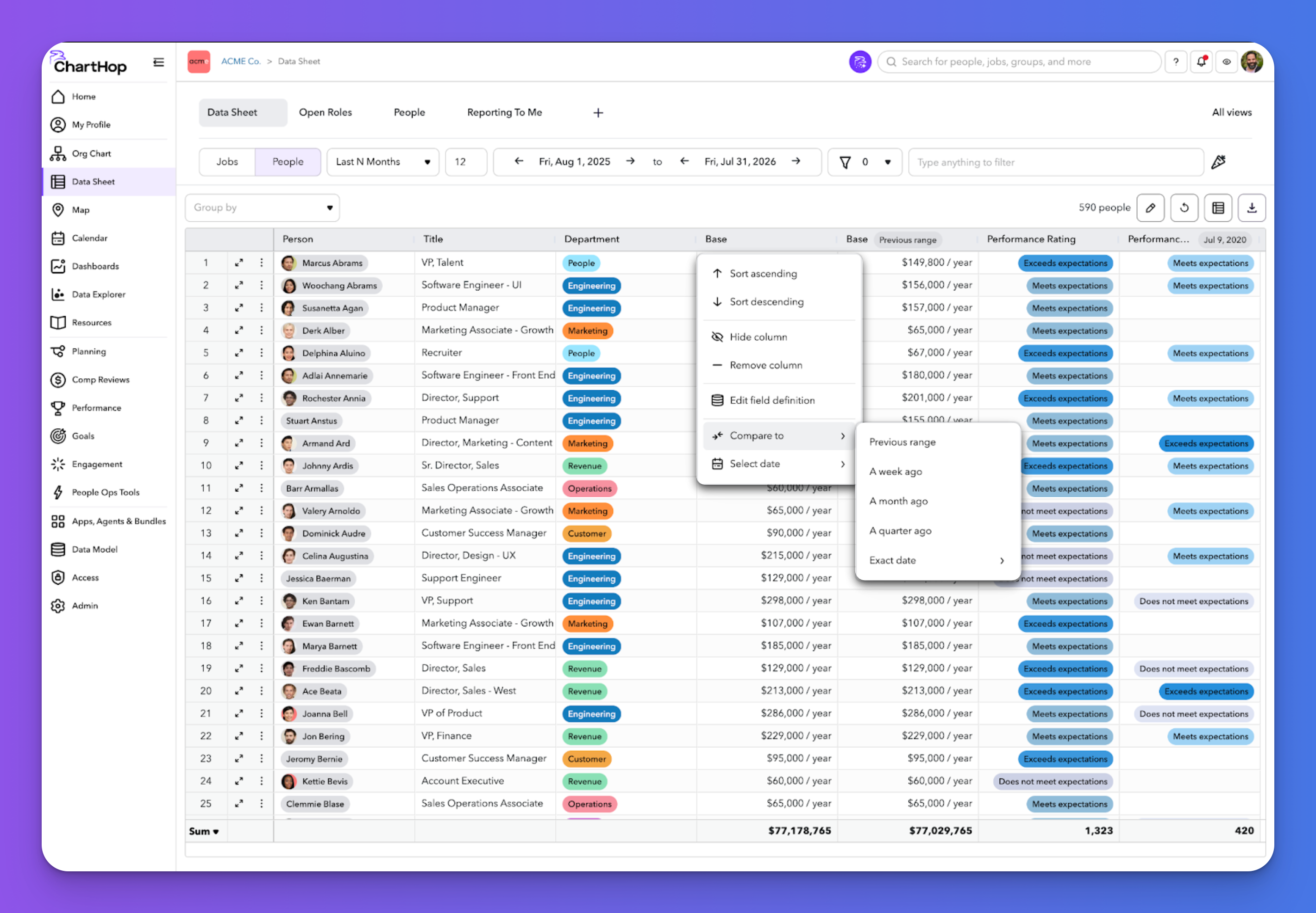
See the latest ChartHop updates for September 2026: time-based columns in the Data Sheet, automated time off milestone awards, fully translated goals, and a smarter scenario org chart.
See the latest ChartHop updates for August 2026: Microsoft Teams support, AI that builds and sends surveys, calibration views for every manager, and a faster importer.