Quiz: How Mature Is Your Headcount Planning Process?
Mar 19, 2026
|
Reading time: min
ChartHop
Most organizations think their headcount planning process is working until Finance and HR show up to a leadership meeting with different numbers. The gap between "we have a plan" and "we have a plan we can trust" is where accuracy, speed, and budget confidence break down.
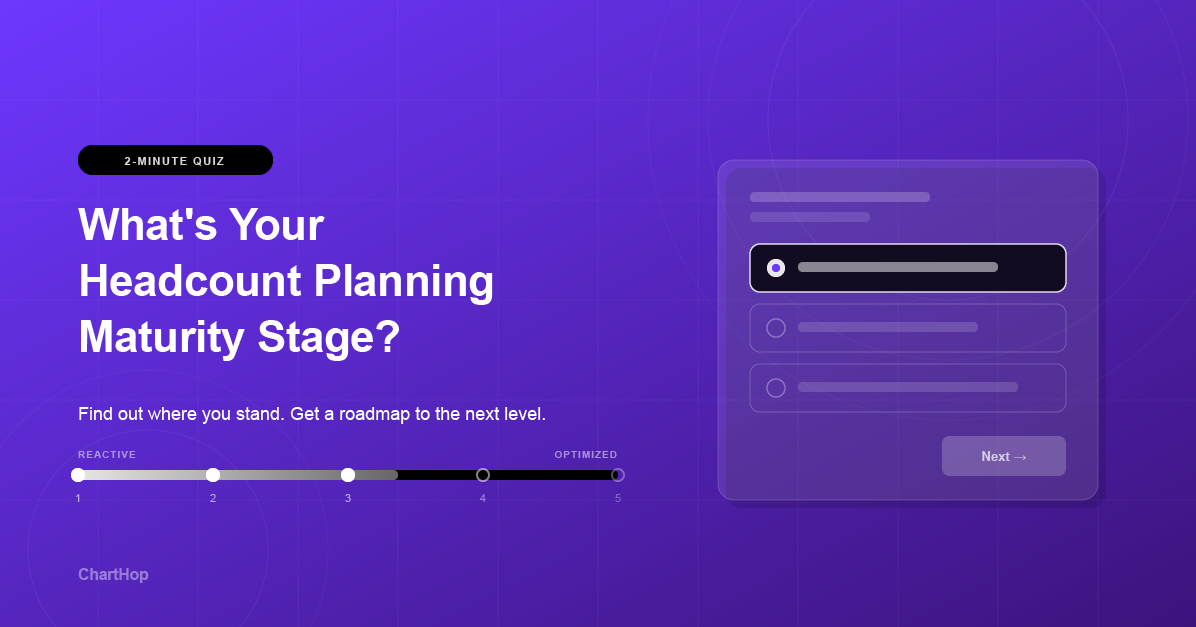
Take this two minute quiz to find out where your organization falls on the headcount planning maturity curve and get a personalized roadmap to the next stage.
2-Minute Assessment
What's Your Headcount Planning Maturity Stage?
Answer 5 questions to find out where your organization stands — and get a personalized roadmap to the next stage.
Question 1 of 5
Question 1 of 5
How does headcount planning currently get initiated at your organization?
Question 2 of 5
Where does your headcount data live — and who owns it?
Question 3 of 5
How do HR and Finance collaborate on headcount decisions?
Question 4 of 5
When leadership asks "what's the budget impact if we delay hiring in Q3?", how long does it take to get an answer?
Question 5 of 5
When your hiring plan changes, what happens to your budget forecast?
Want to go deeper?
Whether you're building your first repeatable process or fine-tuning scenario models for the board, these resources can help you take the next step.
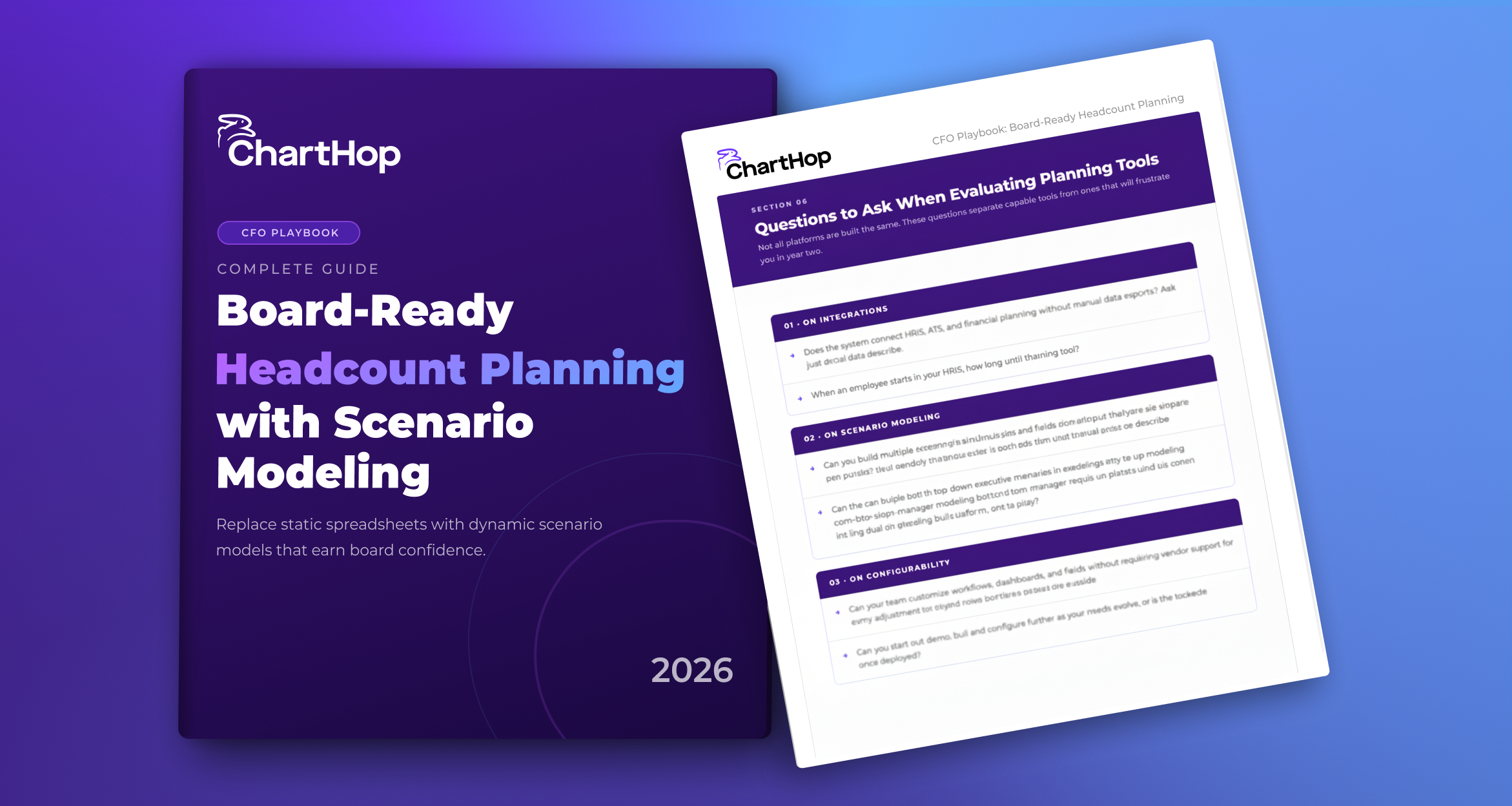
The CFO Playbook: Board-Ready Headcount Planning with Scenario Modeling: A practical guide to building headcount plans that hold up in the boardroom. Download the playbook →
How Wistia Eliminated the Spreadsheet Handoff: How one team reclaimed 8–10 hours a week by connecting HR and Finance data. Read the case study →
Headcount Planning Module: See how ChartHop turns static plans into live, scenario-ready models. Explore it now →
Customer
Share this
Get in touch
Make one good decision that leads to a lot of others. Talk to ChartHop today.
A CFO playbook for leaders who need to walk into board meetings with more than a single forecast — and leave with the board's confidence, not more questions.
Most companies don't offer Summer Fridays, but those that do rank it as one of their highest-impact, lowest-cost benefits. This guide is built from conversations with People leaders who've actually rolled out Summer Fridays programs. It covers the two most common models, how to handle hourly employees and client-facing teams, the logistics that make or break the program, and the risks nobody warns you about.
Building internal HR tools seems cost effective until you account for compliance risk, access control failures, and audit trail gaps. Here's a framework for making the right call.
People Ops Executive Kelsey Browning shares her experience building from zero in a spreadsheet-run company, why software choices signal cultural values, and what genuinely good AI looks like in practice.