Headcount planning: It’s not just about the numbers. It’s about building a winning team that drives your business forward. Whether you’re a start-up just just beginning to build your workforce or an established company looking to expand, creating a strategic headcount plan is essential for success.
But before you start clearing off space on your trophy shelf, you need to build out the foundations of your headcount planning process. By having strategic steps in place, you can create and manage plans to help achieve your goals (like becoming the MVP of headcount planning) and build a strong organization.
Headcount planning is the strategy used to decide the number of employees needed to meet your company’s goals. Companies use headcount planning both in times of growth and when scaling down and re-skilling is needed.
Why is headcount planning so important? Because without a plan, companies have no means to sustain expansion or scale successfully.
Headcount plans often fail because leaders simply don’t have enough context to inform their decisions. To plan effectively, you need a full understanding of your current business, their people, and their goals.
Avoid these common pitfalls to set yourself up for success:
ChartHop’s headcount planning can help you avoid these common pitfalls through its unique support for time based data, which allows you to store, import, and track information over time. This way, you can understand your organization’s past and all of the previous changes that have taken place.
Familiarizing yourself with these pitfalls helps you know what to avoid moving forward. Combined with the five steps below, you’ll have everything you need to create a successful headcount plan of your own.
In the age of AI, you might wonder why a five-step process is still needed for headcount planning. The truth is, even the smartest tools work best when they’re built on a thoughtful foundation.
AI can make headcount planning a whole lot smoother, though. With Ask ChartHop, for example, you can quickly analyze your org structure, compare scenarios, and surface budget impacts across departments. Because it’s built right into the platform, it keeps every interaction grounded in your actual data and permissions, so you can move from asking questions to taking action with confidence.
The five steps below outline the core strategies every organization needs for effective headcount planning, and where AI can help you put them into practice.
Effective headcount planning starts with understanding how work actually gets done today. Getting employee insights through surveys and feedback sessions helps you collect feedback on aspects like employee experience, work-life balance, and workplace culture.
One simple way to gather employee feedback is through eNPS surveys. Like the standard net promoter score (NPS) survey used to gauge brand loyalty, eNPS surveys gauge employee engagement and satisfaction. Normally, these surveys ask employees to rank and describe their experiences on a scale from 1-10.
To inform headcount planning specifically, send out eNPS surveys that include follow-up questions around hiring needs and work performance. For example:

With ChartHop, you can send surveys to employees and use AI to create data reports and open-ended question summary insights to inform your decisions moving forward.
Pro tip: These questions should be different for individual contributors and managers. Managers are often at the frontlines of an organization. If they have consistent 1:1s with their team, give them a means to explicitly communicate how their team really feels. That way, executives have deeper insights into what employee sentiment might be and, in turn, will help them strategically consider adding headcount where it’s needed.
Knowing your current workforce inside and out can help you identify gaps so you know exactly who to hire down the line. With a platform like ChartHop that houses your people data in one place, you can quickly access an up-to-date visualization of your people, reporting structures, and company goals to better understand your business and its headcount needs.
With this knowledge, you can take note of your workforce’s current skills, talents, and backgrounds to identify hiring gaps. AI makes finding these insights as simple as asking a question like, "How many people in my 150-person sales org are fully ramped and hitting quota?"
Ask ChartHop will instantly create the visualization, helping you spot outliers, trends, and patterns you'd never catch in a spreadsheet. When people can see the same data, they can point to the same things and have conversations anchored in truth instead of competing versions of reality.
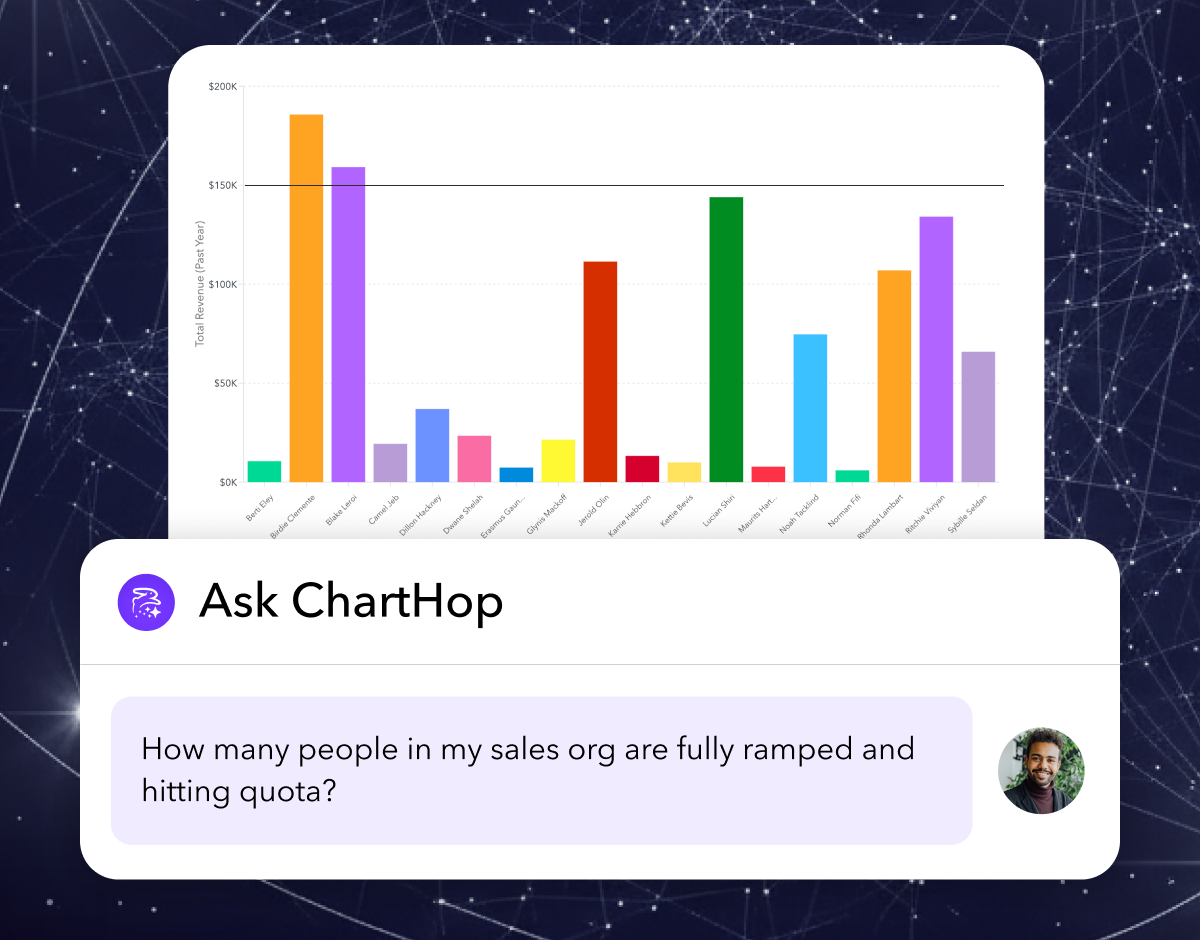
It’s simple to Ask ChartHop questions about your people data so you have the right information to make the right decisions.
Pro tip: Use your people data to drive meaningful change. When you look at your data in one place, you can determine areas of improvement. For example, organizations should make it a routine practice to slice-and-dice their current DEIB information by demographics like race, gender, ethnicity, and age, to then create a hiring plan according to their goals.
When creating a headcount plan, it's vital to examine your business goals and milestones to inform your hiring decisions. To start, look at upcoming key milestones and ask, “What's coming down the pipe that might need additional headcount?” Your answer could include a new product launch, the introduction of a new department, or a fundraising round.
Next, examine your internal goals and company mission with a keen eye. What did your company set out to do, and do you have the headcount to meet these objectives? Hiring is comprehensive, so consider how your organization works holistically to achieve KPIs when setting headcount. Remember, a strong team is the backbone of any successful business, so take the time to plan and strategize effectively.

ChartHop allows you to explore historic versions of your company, and you can ask AI about past decisions.
Pro tip: Looking back on past headcount plans can be helpful for accurate headcount planning and forecasting. ChartHop uses a dynamic timeline feature to visualize how reporting structures have changed over time so you can iterate with intention.
In headcount planning, transparency and context are key. Hiring is holistic and includes a variety of different people who need to be on the same page, like recruitment teams, Finance, HR, and individual hiring managers. Working off of disparate spreadsheets and data is a nightmare, but when all stakeholders are aligned, you’ll feel like Leo in Titanic (aka King of the World).
The preferred way to align the decision-makers is by housing all of your people data in one platform. By doing so, you’ll see numerous benefits, including:
Joe Taranto, HR Generalist & Project Manager at Rémy Cointreau, shares how ChartHop has supported their stakeholder alignment and streamlined their planning process. He says, “It’s not just for decision makers: ChartHop serves as a go-to resource for the entire company to leverage, so everyone can see finished headcount plans and know exactly where the business is headed.”
With Ask ChartHop, anyone in the company can ask questions about headcount planning. The AI respects role-based permissions and field-level access, so people only get the information they’re allowed to see.

ChartHop streamlines your headcount planning efforts by connecting stakeholders throughout your organization and Ask ChartHop allows for role-based permissions for headcount planning questions.
Pro tip: Create a repeatable system for headcount planning approvals. For example, with ChartHop, you can create custom scenario approval workflows so the right stakeholders are involved at the right step for the process, every time.
In order for your headcount plan to be successful, you need to have the resources and training in place to support new hires when they join the team. Implement onboarding plans that prioritize tactical training so new employees can hit the ground running on their first day.
While tactical training is key, onboarding is also a time to familiarize new hires with the company culture, mission, and values. Have resources readily available for employees to learn about your organization. This could be a company intranet, Slack channel, or conversational AI, like Ask ChartHop that can answer any question employees have about the company and return only the information they’re permissioned to access. Also consider implementing a buddy program so new hires have a “go to” person as they navigate the first few weeks.

Pro tip: Collect metrics throughout your employee lifecycle, including the onboarding stage. Take a dive deep into your current onboarding initiatives – like time-to-fill, 30-60-90-day plans, and engagement – to see what’s working and what’s not. Taking the time to analyze this data makes it easy to improve on initiatives down the line.
Creating your headcount plan is an important first step when it comes to building a winning team that drives your business forward. But it’s not a one and done process, and your headcount plan should be a living resource within your company.
You’ll want to regularly review your headcount plan and adjust it as needed to ensure that it remains aligned with the changing needs of your business. Consider this: At a 1,000-person company with 15% turnover, someone leaves every 1.7 business days. This means almost every day there’s a role to backfill, a succession plan to adjust, or knowledge to transfer.
This is where AI can help. With tools like Ask ChartHop, you can instantly analyze shifting team structures, model scenarios, and surface the real-time data you need to make confident decisions as things change. By following the checklist above, and using AI to stay agile along the way, you can create headcount plans that drive organizational success.


Scaling your company takes intentional planning. We sat down with six HR leaders and four themes emerged on how to execute your high-growth strategies.

Ready to strengthen your talent acquisition strategy? Read our tips to help avoid sourcing and retention issues, as well as ways to set your TA teams up for success.
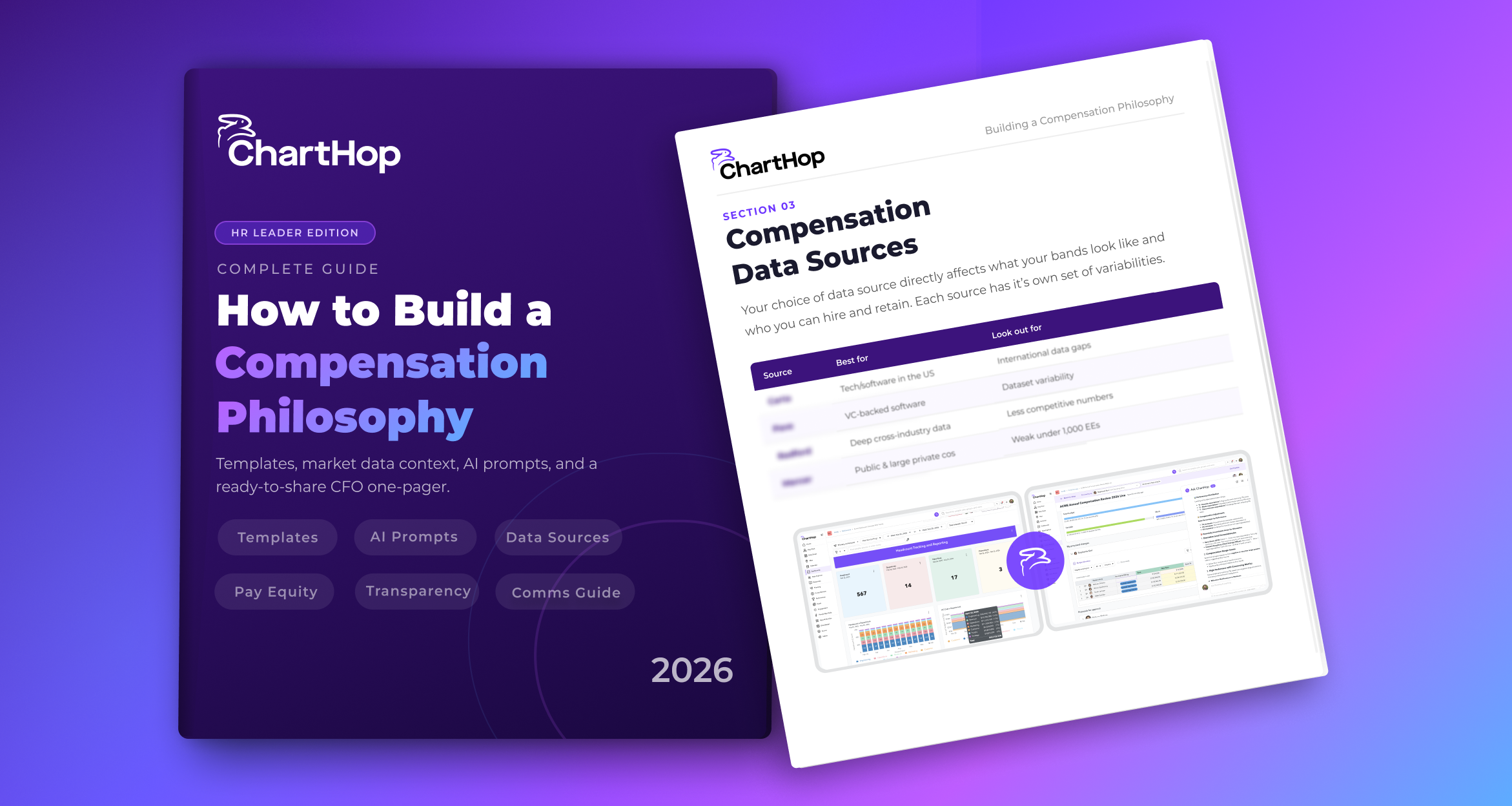
A section-by-section guide to building a comp philosophy with templates, a data source comparison, bias research, and 6 AI prompts. Whether you are building from scratch or looking for a revamp, this is the guide for you.
.png)
Seven HR and business leaders share how they actually do headcount planning. Five minutes each. One framework each. From backfills to AI scenario planning, this guide captures the key takeaways.

Evaluate AI HR tech vendors with confidence with these 15 critical questions that help you assess how AI is built, governed, and applied in real HR scenarios.